Beginners Art Supplies: The Short List If You Want To Start This Weekend
We are Karen and Dale, and we write a blog called Weekend Fiddler. Most Saturdays we clear the dining table, pull a lamp out of the hall closet, and spend a few hours on drawing, painting or whatever is in the craft bin. We are not artists by trade. We are adults with day jobs who started late and are still figuring it out, and our craft bin is full of things we bought too early.
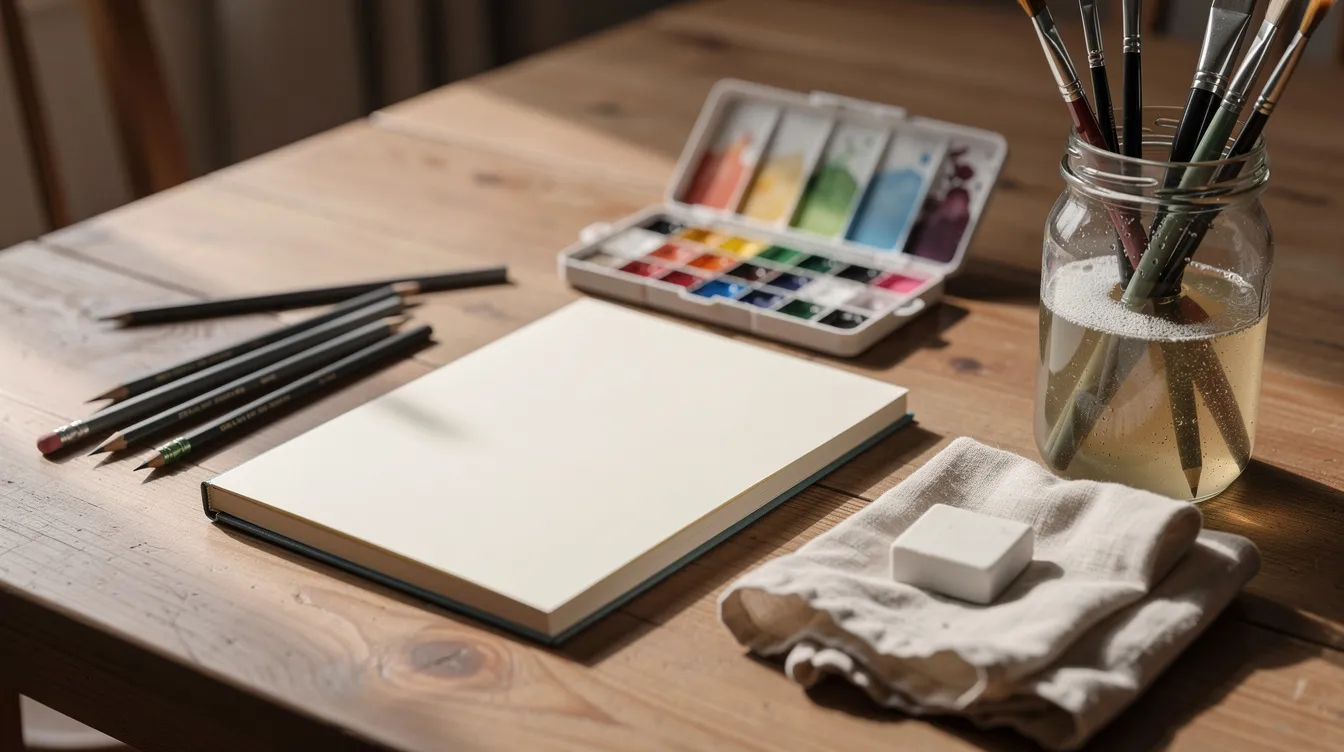
Starting your artistic journey does not require an expensive studio setup. Basic art supplies include paper, pencils and paint, and you can get going with less than you think. Here is what we would buy if we had to start over this weekend: an HB and a 4B pencil, a plastic eraser and a kneaded eraser, a 9×12 mixed media pad, a 12-color student watercolor set, three synthetic brushes, a roll of masking tape, two water jars, a cheap ballpoint or fine tip black pen, and a small set of colored pencils. Our blunt take is that this can cost less than a takeaway dinner and last months of weekend and weekday dabbling. Anything beyond it is optional until you know what you actually like.
This article ranks starter kits by activity, so you can pick one path (graphite drawing, colored pencil, watercolor, mixed sketchbook, or acrylic) instead of buying everything at once. A curated starter kit keeps things fun and versatile without drowning you in choices. You need only a table, a chair and a small set of well chosen supplies. A comfortable surface is essential for art activities, but it does not have to be a studio. We sell nothing. We are sharing what worked after wasting money on random purchases. If you want to know more about who Karen and Dale are and why we write about flops, look for our about page. Want the longer story? Find more about us here.
How We Chose the Best Beginner Art Supplies
We started from zero as adults. Everything we know about supplies for beginners came from trial, error and a few flops, like the time we tried watercolor on printer paper and wondered why the page curled up into a soggy tube. So these are the practical tips we ended up using when deciding what belonged on the list:
-
Ease of use for true beginners who may be rusty since school. Supplies that work out of the box without a tutorial.
-
Availability at common shops in 2026. Everything on this list is stocked by big box craft stores and online retailers. No specialty imports.
-
Price and value. We give rough US dollar bands for each kit (under 30 dollars, 30 to 60 dollars). We judge value by what we actually reached for week after week. Student grade materials are fine while learning, and art supplies can be sourced affordably without sacrificing quality.
-
Forgiveness. Supplies that tolerate mistakes and rough handling, and drawing paper that does not fight back when you erase or add water. Investing in good paper improves the outcome of drawings and paintings more than upgrading paint.
-
Space and cleanup for a small home, kitchen or dining table. Storage containers help organize art supplies effectively and keep the table clear for dinner.
-
Learning potential and low pressure. Materials that do not feel too precious to use on a work night. Focusing on a limited range of supplies is less overwhelming for beginners.
We left out specialized items like airbrush kits, oil painting solvents and oversized easels because they are impractical for most beginners at home. We also left out pastels, charcoal and alcohol inks for now, though alcohol inks are versatile and produce unique effects on various surfaces, and charcoal is a fine foundation medium. Our dining table, a cloth and a shoebox have been enough for years.
Best 5 Beginner Art Supply Sets for Adult Hobbyists
We settled on five distinct paths instead of a huge list: graphite drawing, colored pencil, watercolor, mixed sketchbook, and a compact tabletop acrylic setup. The ranking is by how beginner friendly each path feels at a kitchen or dining table, not by professional quality.
One opinion we want to weave in early: paper matters more than you would guess. Buy one small pad of good paper for trying things and keep a cheap notebook for warm-ups and mistakes. That split took the pressure off us and made the whole hobby more relaxed.
1. Beginner Graphite Pencils Drawing Kit for Everyday Sketching
Drawing is the backbone of visual arts, and this is the simplest, cheapest and least messy way we know to begin. Basic drawing supplies include graphite pencils, erasers and paper, and that is genuinely all you need. If you are brand new to drawing, our guide to getting started with drawing walks through the first exercises.
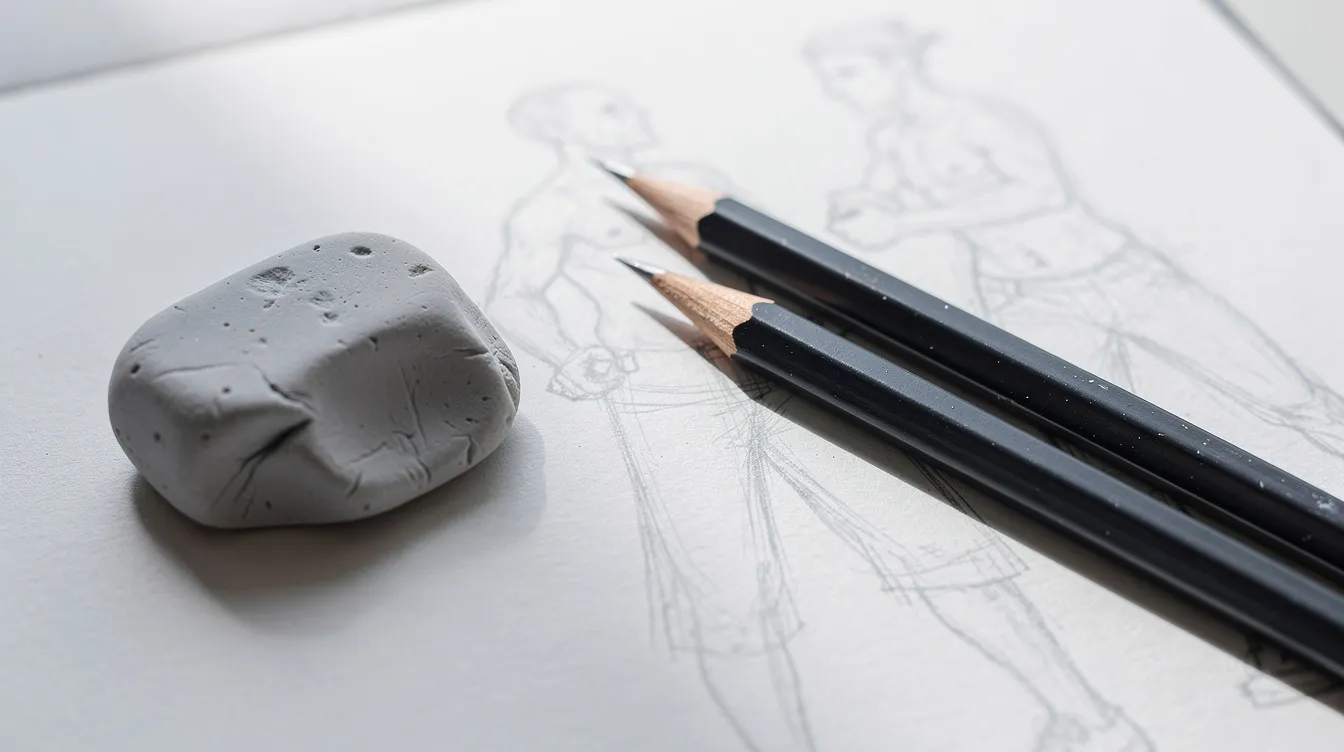
Our take: two pencils are enough. We reach for the same two over and over, an HB for outlines and light shading and a 4B or 6B for rich darks without pressing hard. A small range of graphite pencils covers most sketching needs. A good starter pencil set includes 4H, 2H, HB, 2B and 4B if you want the full spread, but we rarely touch the extremes. Pencils range from 9B (soft) to 9H (hard), and if you are curious how the H to B hardness grading works, the Wikipedia page on pencils explains the clay-to-graphite ratio clearly. Buy a small pack of three or four from a reputable art brand rather than a tin of twenty.
Why It Stands Out
Pencil drawing helps develop observation skills and attention to detail. Graphite teaches proportion, shading and line without the distraction of color or water. Drawing pencils and a sketchbook are all the drawing supplies you need, and all of it fits in a small pouch for roughly 20 to 35 dollars in 2026.
Best For
-
Adults unsure they are “art people” who want to test the habit cheaply.
-
People with only 15 to 20 minutes at a time who want zero setup.
Key Strengths
-
Very low mess and easy to carry on a commute or weekend trip.
-
Teaches shading and values that carry over into every other medium. Pencils provide the foundation for sketching in different forms.
-
Cheap paper makes it safe to fill pages with rough attempts.
-
A standard white eraser is useful for general cleanup, and a kneaded eraser is essential for lifting graphite subtly. We skipped the kneaded eraser for too long and wish we had not.
Possible Limitations
-
Can feel boring if someone wants vibrant colors right away, and does not scratch the painting itch.
-
Smudging is frustrating until you learn to work light to dark and lift graphite with the kneaded eraser.
2. Beginner Colored Pencils Kit for Relaxing Evenings
Colored pencils are a low-pressure, portable bridge between drawing and painting. They are quiet, they create no spills, and they bring color to the table without water or cleanup.
The kit: 24 to 36 mid-grade colored pencils (we found 12 to 24 plenty at first), a handheld sharpener that cuts the wood casing cleanly so the point stays usable, a smooth sketchbook or mixed media pad, and an optional colorless blender. Expect to spend around 40 to 50 dollars for everything in 2026.
Why It Stands Out
Familiar from childhood but capable of serious layered artwork for adults. No water, drying time or special surface needed. Our experience: they are slow for covering large areas, but great for learning to layer color and explore blending and textures.
Best For
-
People who like coloring books or want a quiet, meditative hobby at the end of the day.
-
Apartment dwellers who need a silent, compact activity, and readers nervous about paint.
Key Strengths
-
Easy to control, with no drips or spills on a dining table.
-
Good for botanicals, small still life studies and sketchbook detail work, and travels well in a tin.
-
Layering teaches patience. Most brands sell open stock replacements for favorite colors, so you save money over time.
Possible Limitations
-
Building rich color takes time, which frustrates people who want fast results.
-
Cheap, waxy pencils fight layering, so avoid the very lowest end sets. Long sessions can be hard on hands with grip or joint issues.
3. Beginner Watercolor Kit for Small Tabletop Paintings
Watercolors are great for loose, expressive painting, and watercolor is the light, portable medium we reach for most weekends because cleanup is just water and soap.
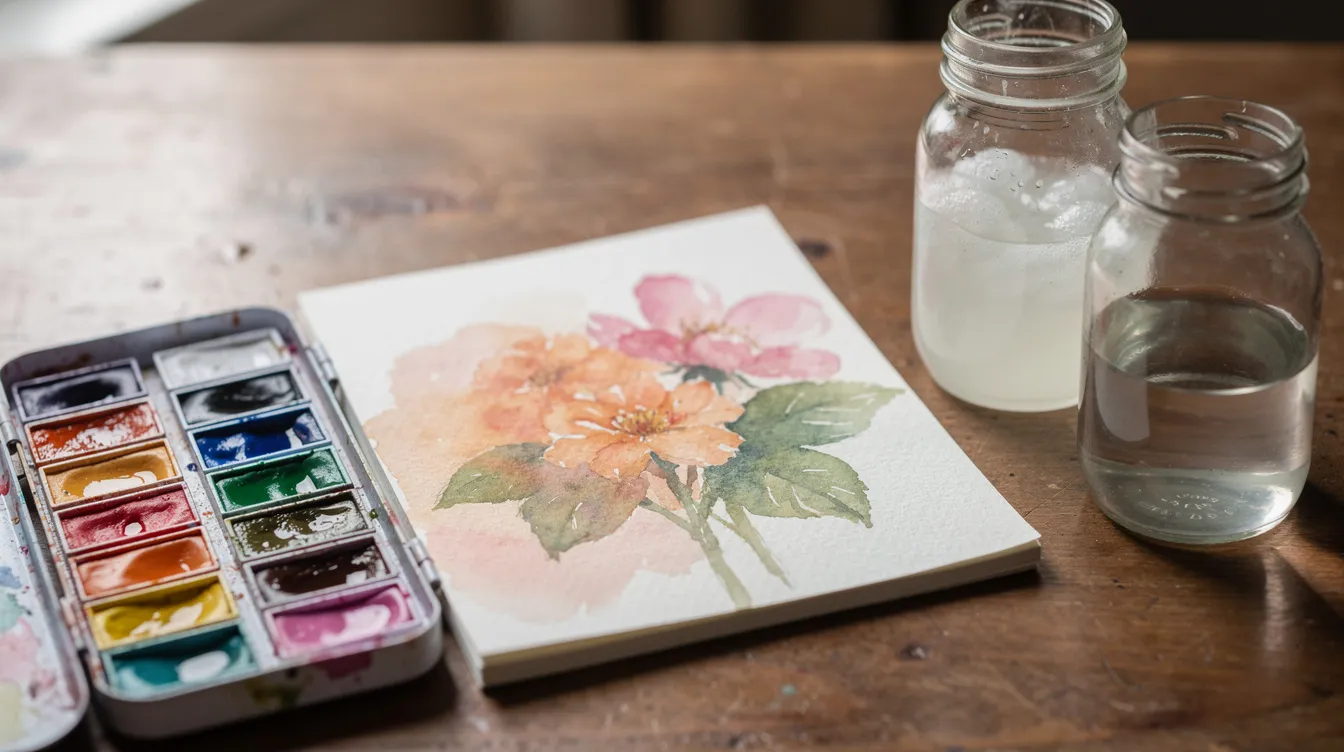
The kit: a 12-color student pan set, three synthetic round brushes (one size 6 or 8 does most of the work), a cold-press watercolor paper pad around 9 by 12 inches at 300 gsm, two water jars, paper towels, masking tape, and a board to tape paper to. Essential painting supplies include primary colors and brushes appropriate for the medium. Using a limited color palette helps beginners learn color mixing, and we have found that 12 colors with intentional mixing taught us more than a big palette ever would. Good quality brushes are more useful than a large set of inexpensive brushes. For readers who want background on the medium’s history and different techniques, the Wikipedia article on watercolor painting is a solid starting point, but remember that a bigger set will not fix muddy washes. Practice did that for us.
Why It Stands Out
Watercolor is a versatile medium for beginners, with transparency, quick start and easy cleanup. Watercolor is a must have art supply for beginners who want to paint without a big production. Paints enable artists to experiment with washes and layering in ways dry media cannot. A small set bought in 2026 for around 35 to 50 dollars can last months of weekend painting. For a longer look at the medium’s history, see Watercolor painting.
Best For
-
Adults drawn to loose, expressive sketchbook pages.
-
People with a wipeable table who can leave pieces to dry for an hour and are comfortable with a little unpredictability. Watercolor is forgiving and encourages experimentation for beginners willing to let go of control.
Key Strengths
-
Very compact: pan set, pad and brushes fit in a small box.
-
Great for quick studies of mugs, houseplants and window views from nature, and easy to pause once a layer is dry.
-
Teaches color mixing without a huge number of tubes, allowing artists to learn by doing.
Possible Limitations
-
Paper quality matters more than beginners expect. We tried watercolor on printer paper and got a soggy mess.
-
Hard to erase once a strong dark wash is down, and chaotic until you learn timing, water control and patience while layers dry.
4. Mixed Sketchbook Starter Kit for Trying Several Media
This is the option for readers who cannot pick one medium and want to dabble cheaply before committing.
The kit: one decent mixed media sketchbook (a 9″x12″ sketchbook is recommended for beginners), a small set of graphite pencils, a fineliner pen (test it on scrap paper so it does not bleed), 12 to 24 student colored pencils, and a pocket watercolor set with a single brush. High-quality pens ensure a smooth drawing experience and enhance artistic expression and control, so spend a few dollars more on the pen. Colored markers provide vibrant colors and precision if you want to add one or two to the kit. They provide a user-friendly approach to adding color and give immediate results that are easy to use when you want a break from pencils. If you want a low-pressure way to fill pages without worrying about good drawings, we wrote a post about starting a sketchbook habit that might help.
Why It Stands Out
A sketchbook helps track progress and allows for experimentation with techniques in different forms. This kit lets someone test pencil, ink, light watercolor and colored pencil layering without four separate purchases. It is ideal for the first one to two months of exploration, finding out what style of art makes you want to keep going.
Best For
-
Adults stuck choosing between drawing and painting.
-
People who want one grab-and-go sketchbook, or who follow beginner exercises that jump across media.
Key Strengths
-
Encourages playful testing over perfection and keeps all experiments in one sketchbook, which becomes its own source of inspiration.
-
Mixed media paper handles light washes and dry media without falling apart.
-
Can stay under 60 dollars in 2026 if you shop student lines. Our warning: a 72-piece set gives you 60 things you will not touch.
Possible Limitations
-
Mixed media paper is a compromise for heavy watercolor or detailed colored pencil layers.
-
Choice overload on a busy evening, and upgrading later may mean buying media-specific paper.
5. Compact Tabletop Acrylic Paints Painting Kit
This is the “I really want to paint thicker” route for adults who like bold color and do not mind more setup. We would try it second, after a simpler medium has shown you that you will keep sitting down to create things.
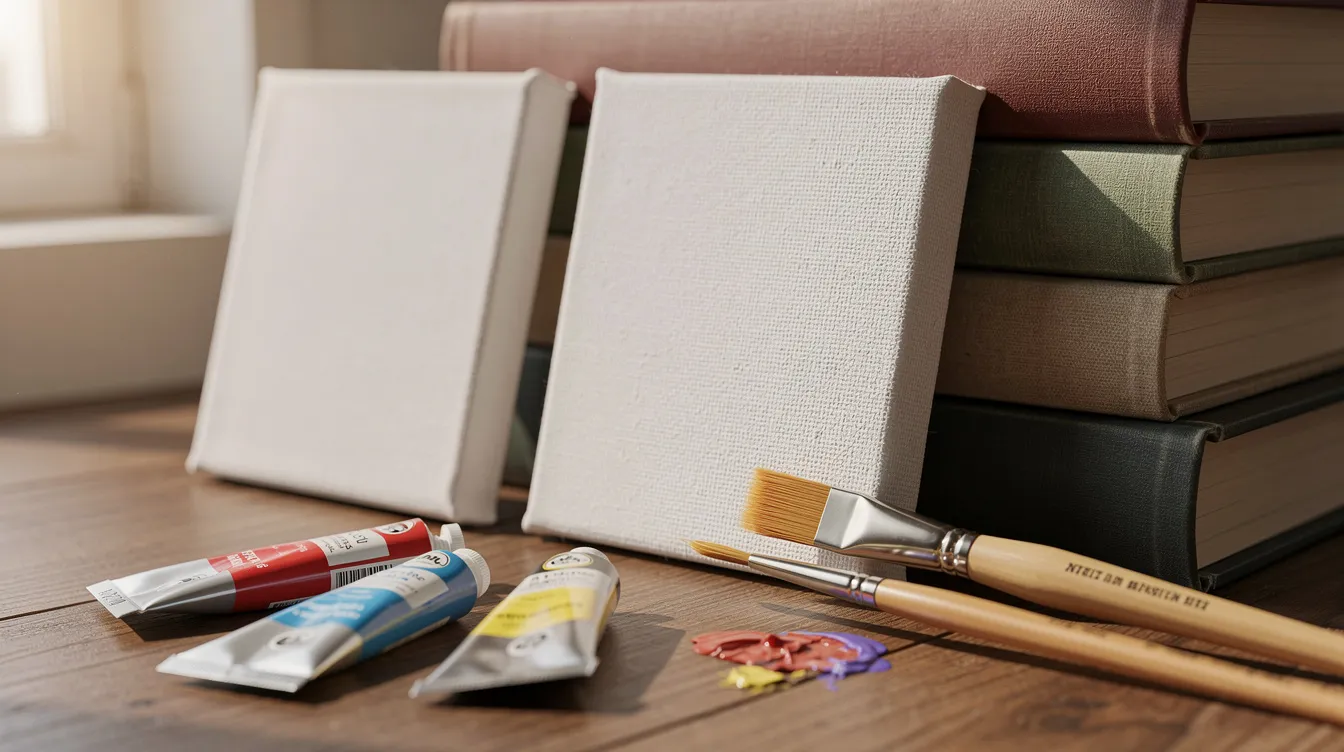
Contents: a small student acrylic set of 8 to 12 tubes (a basic acrylic paint set is essential for beginners in painting who want opacity), canvas panels or acrylic paper, 3 to 5 synthetic brushes in various sizes, a palette or palette sheets, a water container, cloths, and a board propped against books instead of an easel. That said, if you have the space, invest in a good quality easel for painting because it makes longer sessions easier on your neck.
Why It Stands Out
Acrylics are beginner friendly because they dry fast and clean up with water. Acrylic paints feel satisfying to push around, and canvas panels have a real painting feel that motivates beginner artists. The matte finish of student acrylics dries to a clean look on small panels.
Best For
-
People who want opaque color and small wall-ready pieces that bring their creative visions to life.
-
Weekend painters with a protected table and an hour or more in one block.
Key Strengths
-
Forgiving: paint over areas you dislike once dry.
-
Small canvases are easy to store or gift, and water cleanup is simple if you wash brushes promptly.
-
Beginner sets in 2026 often include mixing guides for craft projects and basic color shapes.
Possible Limitations
-
Paint dries on the palette, so squeeze out less than you think.
-
More cleanup than drawing, and a stronger smell than watercolor or pencil in small rooms.
Quick Comparison of the Best Beginner Art Supply Paths
Here is a fast way to match your personality and living situation to a starting kit.
-
Beginner Graphite Drawing Kit: best for tiny budgets, zero mess and learning fundamentals anywhere.
-
Beginner Colored Pencil Kit: best for quiet, meditative color work in short evening sessions.
-
Beginner Watercolor Kit: best for compact tabletop painting with quick setup and light effects.
-
Mixed Sketchbook Starter Kit: best for undecided beginners who want to sample several media in one book.
-
Compact Tabletop Acrylic Painting Kit: best for bold color and small canvas paintings with a studio feel at home.
How to Choose the Right Beginner Art Supplies for You
The best kit depends on your life, budget, mess tolerance and what sounds fun enough to keep you coming back on tired evenings. This section covers three decision levers.
Choose Based on Your Space and Mess Tolerance
Your living situation narrows the options quickly. Our setup is one box we can pull out and put away in a few minutes, which makes us draw more often than we would if setup were a production.
-
Graphite or colored pencil if you must clean up fully after every session and share a dining table.
-
Watercolor in a lidded palette if a board can dry on a side table.
-
Acrylic only if you can protect surfaces and ventilate a little.
Choose Based on Your Time and Energy
Some media suit quick daily streaks, others weekly deep dives.
-
Graphite and colored pencil for 10 to 20 minute windows before or after work.
-
Watercolor and acrylic for longer weekend sessions when you can set up and clean up without rushing.
-
Mixed kits for unpredictable schedules when you want to experiment with whatever tools you grab first.
Choose Based on What Makes You Curious
Curiosity keeps the habit alive more than any correct learning sequence. If you keep bookmarking loose paintings and sketchbook tours, watercolor or the mixed kit will scratch that itch. If you enjoy intricate detail and slow layering, colored pencil or graphite will hold your attention. If you imagine a tiny home studio with canvases leaning on the wall, start small with acrylic panels.
Our rule for buying more: add other art supplies when you hit a real limit, such as wishing for one missing color or watching your paper buckle under a wash. Upgrade the paper before the paint. Do not shop because a display looks nice. Creativity can flourish without the need for expensive professional supplies.
Which Beginner Art Supply Path Is Best for You?
Here are our direct recommendations.
-
Choose Beginner Graphite Drawing Kit if you want the cheapest, simplest way to practice daily with almost no cleanup.
-
Choose Beginner Colored Pencil Kit if you relax with slow, detailed work and want portable color without water.
-
Choose Beginner Watercolor Kit if you crave light, loose painting and can tolerate some unpredictability.
-
Choose Mixed Sketchbook Starter Kit if you are not sure what you like yet and want to explore before committing.
-
Choose Compact Tabletop Acrylic Painting Kit if thick, opaque paint and small canvas pieces excite you.
Pick one kit. Use it for a month before upgrading. For a step-by-step start, read our first sketchbook steps for beginners. The development of your ability comes from the hours at the table, not from the price of the materials.
Final Thoughts
There is no single perfect beginner list, only the kit you will actually pull out on an ordinary Tuesday. A small, imperfect set you learn the quirks of will always teach you more than an expensive range of tools you are too afraid to open. Artistic expression does not wait for the perfect setup.
We bought a huge marker set once and used four colors. We tried watercolor on printer paper. We bought gel pens that skipped and crayons that surprised us (crayons improve fine motor skills and are genuinely great for loosening up as beginners). None of it was expensive, but each flop taught us to start smaller and notice what we reach for. Alcohol inks are versatile and produce unique effects, and someday we will try them, but right now our Saturday table has a sketchbook, two pencils, and a small pan set, and that is enough.
Clear a corner of the table this week. Pick one path. Let the first awkward pages and paintings be part of the hobby, not proof that you picked wrong.
FAQ
How much should I spend on beginner art supplies? A couple of pencils, an eraser, a sketchbook and one small medium set is genuinely all you need. Spend a little more on paper than you think you need, because that is where the price difference shows up most in your results. A usable drawing kit runs 20 to 35 dollars; a watercolor or acrylic painting kit runs 35 to 60 dollars.
Do I need expensive artist grade materials? No. Student grade is fine while you are learning. Upgrade one item only when it holds you back, not before. Most essential art supplies at the student level behave well enough for months of weekend work.
What is the best first medium? There is no single answer. Pencil and pen are the simplest drawing tools and serve a specific purpose as a foundation. Colored pencils are tidy and forgiving. Watercolor is portable and expressive. Pick what you are most curious about and stick with it for a few weeks of real practice.
Should I buy a big set to save money? Usually not. A smaller, decent set topped up as needed tends to cost less overall and keeps you focused on techniques rather than sorting through a box of must have art supplies you never touch.
Can I use regular printer paper? Fine for quick pencil or pen sketches. For paint, markers or heavy erasing, use a sketchbook or watercolor paper with enough weight to handle moisture. Printer paper will buckle, soak through and fight you every step.