Most Saturdays we clear the breakfast plates, pull the craft bin out from under the hall table and open our sketchbooks. If you want the short answer to the question in the title, here it is: get one cheap sketchbook, pick up one pen or pencil, spend ten minutes on one ordinary object, and have no plan to show anyone. That is how we started, and it is still how most of our sessions begin.
We are Karen and Dale at Weekend Fiddler, two hobbyists with full-time jobs and no formal training. Sketchbooking is our low-pressure way to keep an art journey going alongside chores and groceries. Everything in this article comes from stumbling, testing and filling several sketchbooks over the past few years, including a few we abandoned after three pages. A sketchbook, the way we use it, is a visual diary of ideas: rough drawings, color swatches, to-do lists, taped receipts, notes and half-finished experiments, not a gallery of polished pieces. It can include observations, thoughts, even a grocery list scribbled beside a sketch of the kettle. Sketchbooking is especially beneficial for adults starting a creative hobby later in life, because it asks for process, not perfection. If you want to know whose habits you are reading about, we talk more about our dining table setup on our About page. For a plainer introduction to the wider practice, see a plain guide to drawism.
Choosing the Right Sketchbook for How You Actually Draw
In 2023 and 2024 we bought too many wrong sketch books. Our first mistake was a beautiful, expensive book we were too afraid to touch. It sat on a shelf for months. Now we buy inexpensive ones on purpose, because a cheap book you actually use beats a gorgeous one gathering dust.
Choose a sketchbook based on paper quality and size. Here is what we keep around:
-
A5 hardback (fits a tote bag, good for waiting rooms)
-
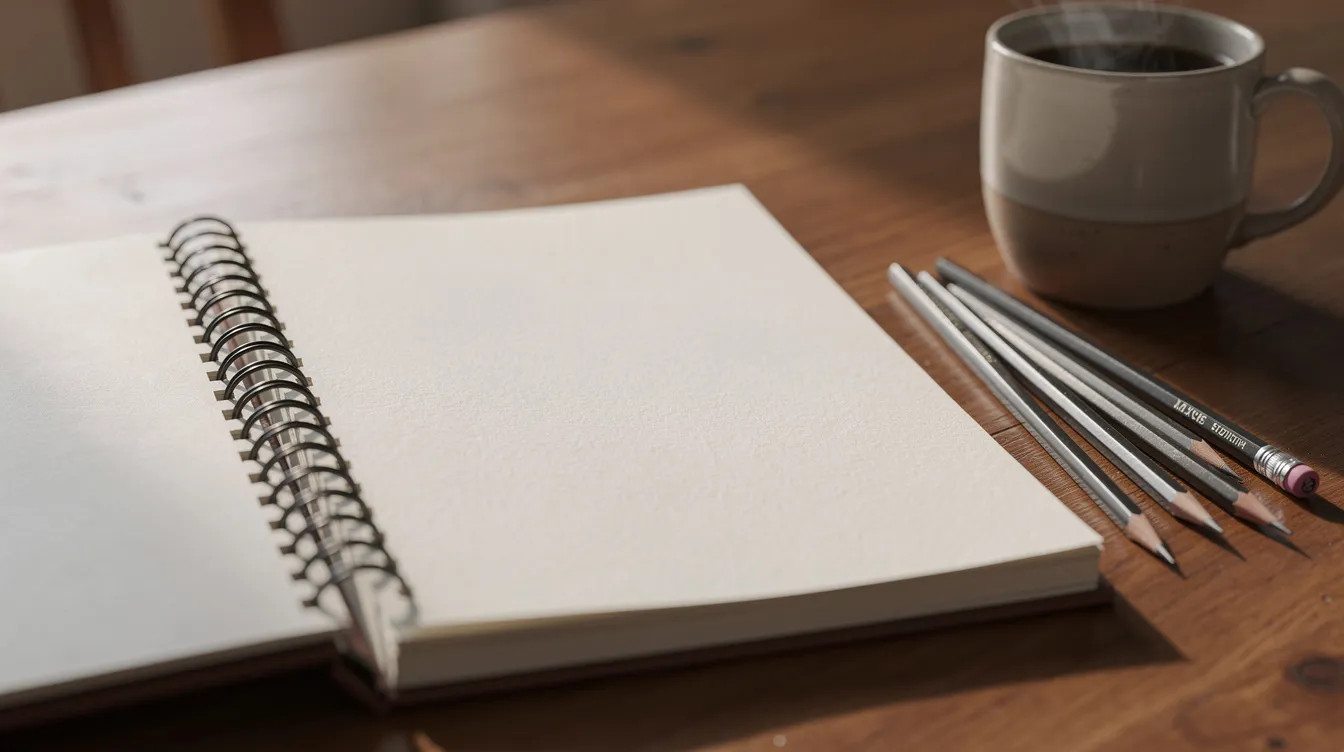
Cheap A4 spiral pad (lives on the dining table, our workhorse)
-
Tiny pocket book (train doodles and coffee-line scribbles)
Spiral-bound sketchbooks offer flexibility for sketching because they lie flat and fold back easily. Stitched books feel nicer to keep long term. Glue-bound pads we do not mind cutting apart, but a stiff glued spine fights you while you draw.
Paper weight in plain language: 90 to 120 gsm is fine for dry pencil and pen work. If you want to try a light wash, step up to 160 to 200 gsm. Watercolor paper should be thicker than 128 gsm, and if you plan to soak a page, go to 300 gsm. Smooth paper suits clean pen lines; textured paper with more grain catches graphite and charcoal nicely. Beginners do not need to decide on watercolor paper on day one. Start dry, and let curiosity pull you toward wetter mediums later. You need much less than the shop displays suggest: a pencil, a pen and a pad will get you through the first month.
Several Sketchbooks, Several Jobs: How We Split Our Practice
By mid 2025 we had sketchbooks scattered across the house, so we gave each one a clear purpose. Use different sketchbooks for various projects to stay organized:
-
Daily crumbs book for ten-minute doodles and warm-ups.
-
Project book for more careful drawings, brainstorming and planning a small watercolor or a collage idea.
-
Travel and café book that only leaves the house with us, capturing moments in time and memories from the world outside our kitchen.
This split reduced pressure. If the daily book looks messy, we have not ruined our main journal. We write labels on the inside cover: “Practice only,” “Watercolor tests,” or “Life notes and doodles.” None of the books are precious. Paint prices sit beside crooked thumbnails and grocery lists. If you are short on time, start with just two books, one to carry and one that never leaves the home table, and add more only when a clear need appears.
Sketching Techniques We Actually Use in Our Sketchbooks
We are not covering every academic method here, only the sketching techniques we return to weekly. At the start, limit tools to a pencil and a black pen. A pencil lets you correct mistakes. A pen teaches you to accept them. Experiment with various drawing tools to find your preference, but add colored pencils or a cheap travel watercolor set only after a few filled pages so each new thing feels like a treat, not a pile of supplies to learn all at once. We cover what beginner art supplies you need in a separate post. For a step-by-step start, read our beginner drawing guide.
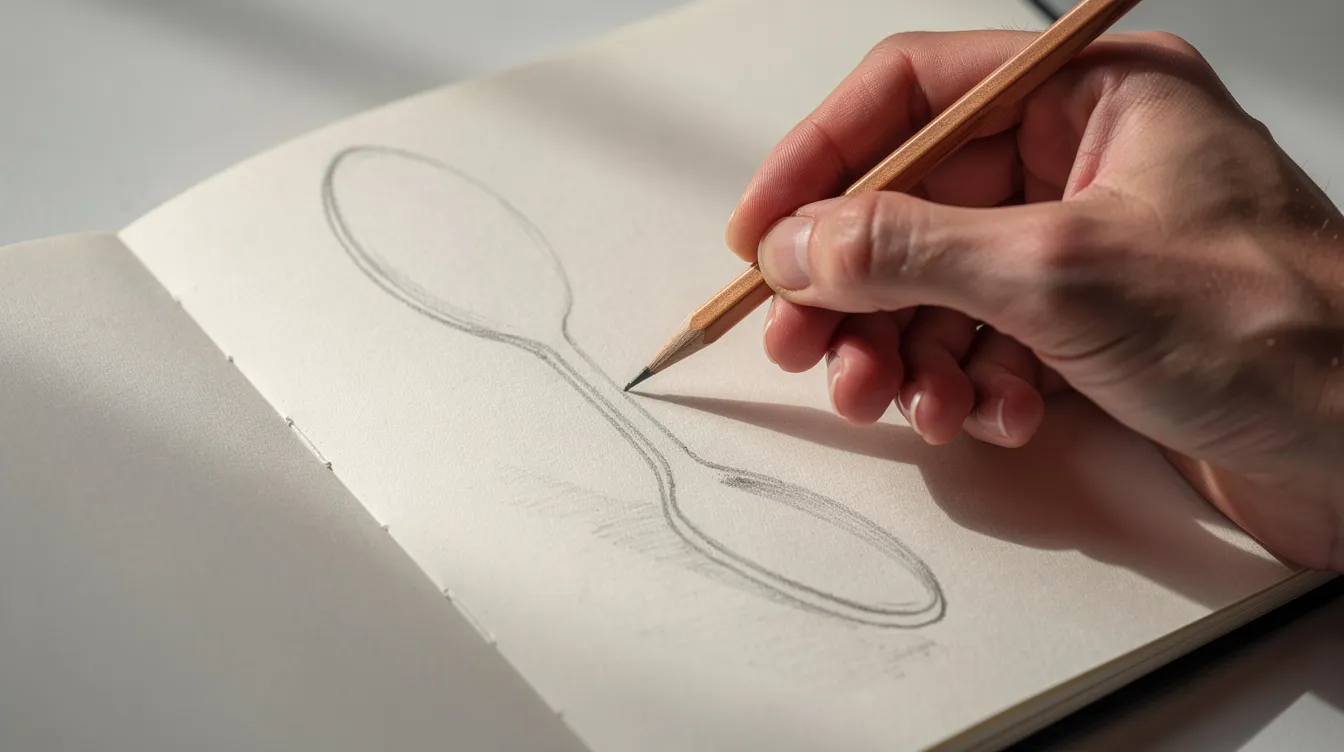
Our mini warm-up takes five minutes: quick circles, lines across the page, then two-minute gesture drawings of whatever is on the table. For basic shading, we use hatching, cross-hatching and tissue smudging with an HB mechanical pencil and a 2B wooden pencil. A favorite exercise is the spoon drill: draw one spoon three times, first as an outline, then with shadow shapes, then with full shading. Observational drawing like this trains you to see proportions and details accurately, and it builds hand-eye coordination you can feel after a few weeks.
Draw what is within reach. A mug, a kettle, shoes, your own hand, a houseplant. Everyday objects sit still and cost nothing. Sketchbooking allows for testing new materials and artistic techniques, so try ink over pencil, or test color in small swatches with notes like “too streaky” or “drawn after work, 10 minutes.” You can explore different mediums and textures on a single page. Using a sketchbook as a playground encourages artistic freedom, and experimentation in sketchbooks fosters creativity and personal expression. Quiet, rough repetition has moved our art journey forward more than any single good drawing ever did.
Taking the Pressure Off: First Pages, Ugly Drawings and Private Pages
In late 2024 we bought a new sketchbook with cream paper and a linen cover. We did not open it for three weeks. The thing that broke the spell was writing our names in wobbly marker on page one and gluing in a bus ticket. Starting in the middle of a sketchbook reduces intimidation too, because you skip the power that a first page holds over your head. Our “three ugly pages” rule helps: fill three pages as quickly and carelessly as possible so the book already has smudges and the tension drops. Creating in a sketchbook helps reduce perfectionism and creative pressure.
Our rules for bad pages:
-
Do not tear anything out.
-
Date each page, even the flops.
-
Write a short note beside a miss, such as “pen skipped here” or “this angle felt wrong.”
-
Sometimes skip the eraser and draw over mistakes, because mistakes in sketchbooks are essential for artistic growth. They are opportunities, not failures.
A sketchbook is a safe space for experimentation, a private laboratory for artistic exploration. We keep some pages completely private, like spreads with written worries and lopsided sketches we never photograph or share. During sketchbooking, you can make mistakes without fear of judgment, and that privacy is what makes the book feel free. Sketchbooks allow for personal expression without pressure, and that is their real power.
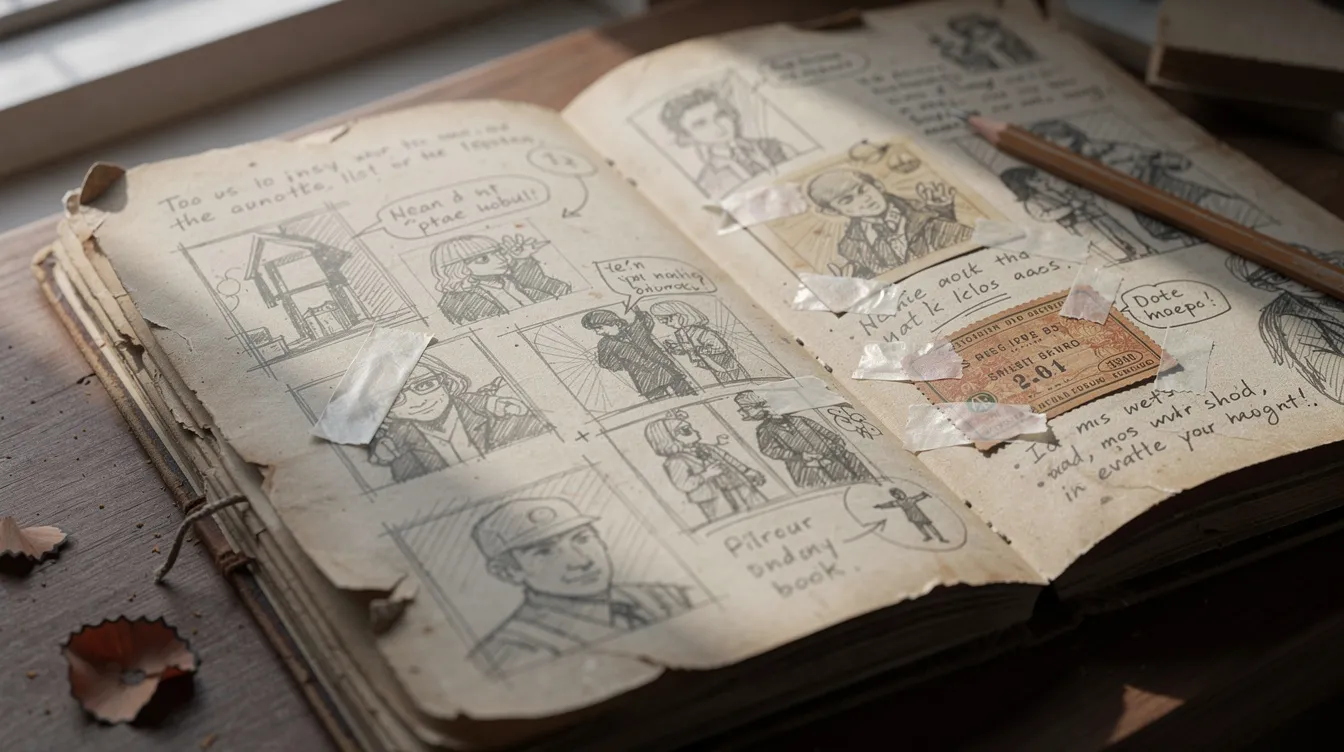
Looking back at a 2022 sketchbook with its crooked chair legs and flat faces, we feel proud now. If you ever click through YouTube videos of perfect sketchbook tours and feel behind, remember that those other artists have shelves of messy books we never see. Even the Metropolitan Museum of Art collection holds study pages where artists crossed things out and changed their thought process mid-drawing. Working sketchbooks have always been scrappy. Let coffee stains, taped corners and corrections stay. They document a life lived around the art, not apart from it.
Making Sketchbooking a Habit You Can Keep
Most of us are tired after work. We tried long daily drawing challenges in 2025 and they did not stick. The change that worked was shrinking the goal: ten minutes is the session, continuing is a bonus, and stopping still counts. Short, daily sketching sessions help improve muscle memory and observation skills, and regular practice improves artistic skills over time even when each session feels tiny. Daily sketching practice builds confidence and skill in a way that spending many hours once a month does not.
Our routine now: Saturday at the table, one weeknight, and five-minute sketches while pasta water boils. We set time-based goals like “ten minutes with a pen three evenings this week.” We attach drawing to something already in our routine and leave the book open on the table with a pencil across it as a silent reminder. Effective sketchbooking combines daily practices with a focus on experimentation, so we also keep a short prompt list on the inside cover:
-
Draw something you touched today.
-
Draw with your non-dominant hand.
-
Draw without lifting the pen.
-
Fill a page with small squares of pattern or color.
If you run out of inspiration, redraw the same object in a different style or from a different angle. Repetition teaches more than hunting for something new. Regular sketching builds skills like observation over time, and you will discover your own preferences page by page. Forget perfection. Play with whatever is in front of you. Messing around on paper is the whole point. Drawing together, the way we do on Saturdays, turns the habit into a small weekly event rather than a chore, and it helps us both develop and grow without taking it too seriously.
An imperfect, half-filled sketchbook from this year will teach you more than a perfect one you never dared to begin. Clear a corner of the table tonight, open to any page, and draw whatever is closest. That is how every fun project and every mindful moment in our sketchbooks started: not with a plan, but with a mark on a page.
FAQ
How often should I draw in my sketchbook? Aim for ten minutes, two to four times a week at first. Short regular sessions beat occasional long ones, and consistency matters more than duration. Of course you can keep going if the moment feels right.
Do I need to be good at drawing to start sketchbooking? No. The point is practice and enjoyment. Clumsy early pages are part of the fun to look back on, and a sketchbook functions as a private space where nobody grades your work.
What should I draw first? Simple objects around your home: a mug, a plant, your shoes. They hold still, cost nothing, and you can read their shapes without any special setup.
Should I use pencil or pen? Try both. Pencil is forgiving and lets you erase. Pen stops you fussing over every line and helps you find spontaneity. Many people plan in pencil and finish in pen.
What if I run out of ideas? Use a short prompt list, or redraw the same object in a different way. Repeating a subject often teaches more than hunting for something new, and it keeps expectations low so you can just start.